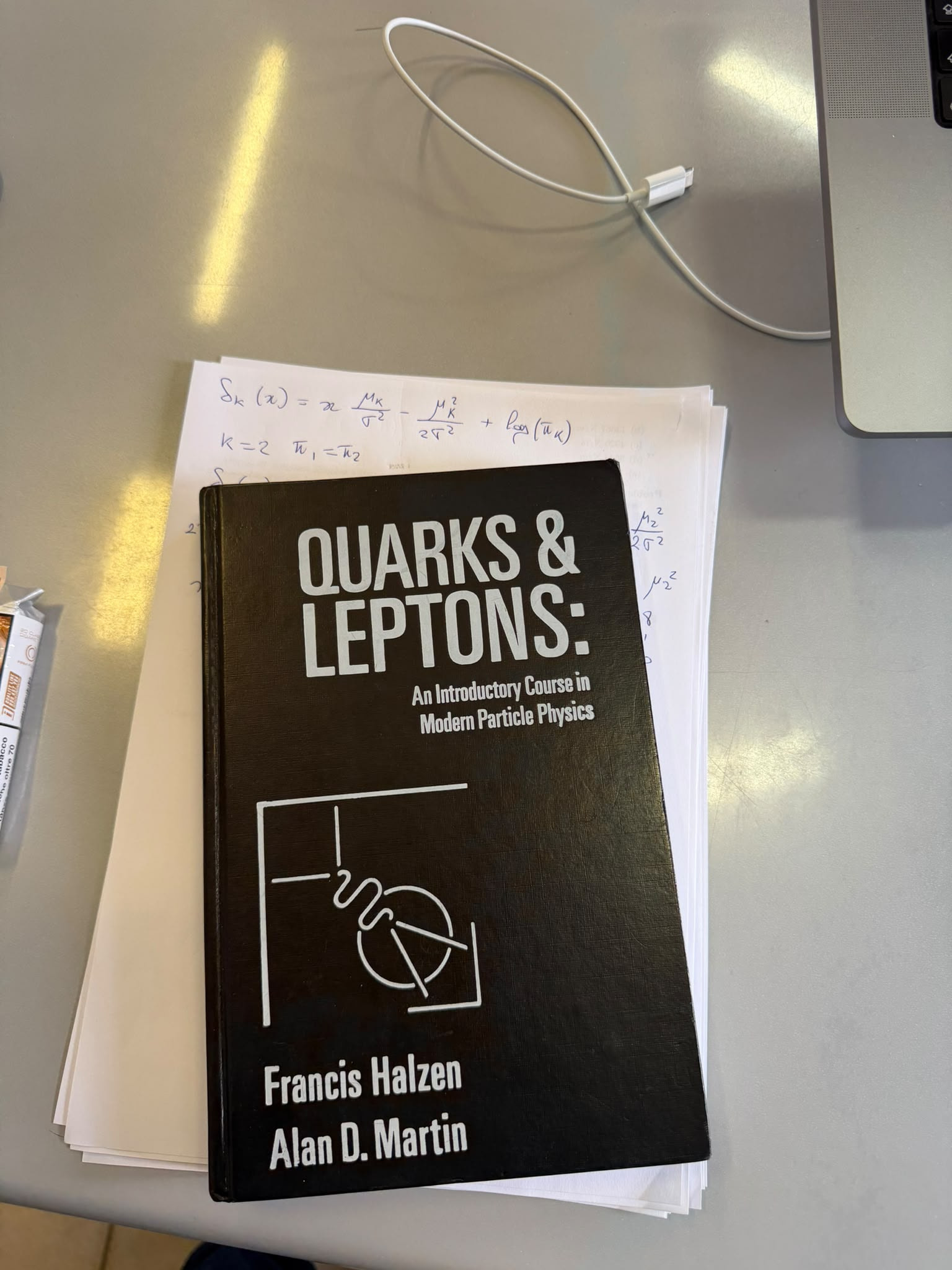
Mecojonissimi
https://ufhealth.org/news/2025/surprising-finding-could-pave-way-for-universal-cancer-vaccine
Se anche esce non lo uso perché sicuramente provoca l’autismo 
Speriamo 
Ma con questo ti danno la sim 5g o 6g?
Sorpresa: il cervello non è un organo, ma due fusi assieme. Così dicono i ricercatori di Stanford.
Beh alla fine la saggezza umana ci era arrivata anni prima a questa conclusione: da li il famoso detto che gli uomini pensano con il ca…
L’articolo poi è già di un anno fa
https://x.com/DarioAmodei/status/2102831170299834652
Today we announced the Claude-led discovery of a molecular machine that we suspect could represent a new gene editing mechanism. Its precise function, biotechnological utility (if any), or level of significance is not yet clear, but at minimum it is work I would have been proud to do as a PhD student. The work was done mostly, though not entirely, by Claude: our life sciences team suggested a broad area of research, Claude read through the literature and a bunch of genome data and discovered something interesting, then Claude proposed experiments to verify the discovery and our team carried them out.
It’s easy to dismiss this as a one-off or curiosity, but we’ve repeatedly seen a pattern where AI performance in new intellectual domains goes from weak to superhuman in a matter of a few years. In 2023 models struggled to do math at the level of an average high-school student. In 2024 they started to do well on math competitions for the best high-schoolers in the country, in 2025 they started to solve minor open problems, in early 2026 more significant open problems, and in late 2026 they are beginning to solve the top few open problems in all of mathematics. We believe AI for biology is on a similar exponential trend.
The main difference between biology and mathematics, of course, is that math can be done purely theoretically, while biology requires experimentation. Some have used this to draw the conclusion that AI’s utility in biology will be limited. We think this is wrong. As we’ve demonstrated today, humans can collaborate with AI to perform the experiments, validate key results in a few weeks and, if necessary, work with the AI to iterate on what they find. Eventually it may even be possible for Claude itself to safely perform the experiments by autonomously controlling lab equipment, with appropriate safeguards in place, but we aren’t doing that today (our lab is also a BSL1/BSL2 facility that doesn’t handle materials dangerous to humans).
More broadly, biomedical advancement has many stages — from fundamental biology discoveries, to translational research, to drug discovery, clinical trials, and finally the actual delivery of medicines and health care to patients. We are also interested in these later stages, but even simply accelerating the first stage of fundamental biological discoveries has the potential to speed up and broaden the entire pipeline. Improving our understanding of biology and sharpening biologists’ tools can drive forward all of the later stages, for example by identifying new drug targets, finding new therapeutic modalities, allowing for more precise measurement, and speeding up the experimental loop which itself further accelerates our understanding of biology. This will not in itself speed up clinical trial times, but if it succeeds it could greatly increase the number of promising candidates that go into the pipeline — an increase in throughput even though latency remains.
In Machines of Loving Grace, I wrote about AI’s potential to “cure most diseases in 5-10 years” — a goal that sounds impossible, but one I believe is just barely possible if AI is applied to every stage of the pipeline. The first step is showing that AI can first help with, and then drive, biological discoveries.
Claude’s discovery is the latest in a line of related prior work that goes back decades, beginning with systems like CRISPR, and continuing with discoveries like the bridge recombinase and VIPR in the past few years. Recently, there has been heightened interest in systems based on reverse transcriptase (RT) enzymes, the enzyme underlying the system Claude identified. And most recently, a Stanford team working independently described a novel RT system with an associated non-coding array that is in some ways similar to the one Claude found, though they are distinct systems that evolved independently from each other. I believe that we’re at the very beginning of finding such systems and developing them into powerful tools for biotechnology.
I’m proud of the resources Anthropic has invested in accelerating the public benefits of AI through the life sciences, and we’re aiming both to grow our life sciences team and to work with other scientists to extend this approach to a broad range of problems. If you have a proposal for a research collaboration or are interested in joining our life sciences team, please reach out.
ma in tutto questo, un link all’articolo scientifico in cui descrivono che hanno fatto, l’ha messo?
Non è ancora pubblicato e peer reviewed ma degli scienziati dicono che stavano lavorando su lo stesso identico sistema enzimatico (gli ART) negli ultimi quattro anni, utilizzando proprio Claude per le loro ricerche, sebbene non avessero ancora pubblicato i loro risultati
https://www.nytimes.com/2026/09/27/science/anthropic-biology-enzyme-mestre.html
Le LLM che rubano il lavoro degli umani? Un surprisedpikachu al tavolo cinque, per favore.

come la vedete questa invenzione? fuffa? oppure funziona e le bigcompanypetrolifere faranno sparire tutto?
Non è mai energeticamente conveniente, per il resto la Benzina è un derivato degli idrocarburi e quindi, oibò, è composta da una catena molecolare di Carbonio e Idrogeno; dunque, cosa è presente nel fluido gassoso atmosferico ? La CO2, mentre l’Idrogeno lo prendi dall’acqua elettrolizzata; ma è l’equivalente di circolare con ruote triangolari, o far volare un mattone, con abbastanza potenza non fa differenza, ma che utilità ha ?
Nessuna, salvo qualche epica scoperta di catalizzatori che aumentino l’efficienza del processo di 100X.
Che poi magari con l’IA sai mai…
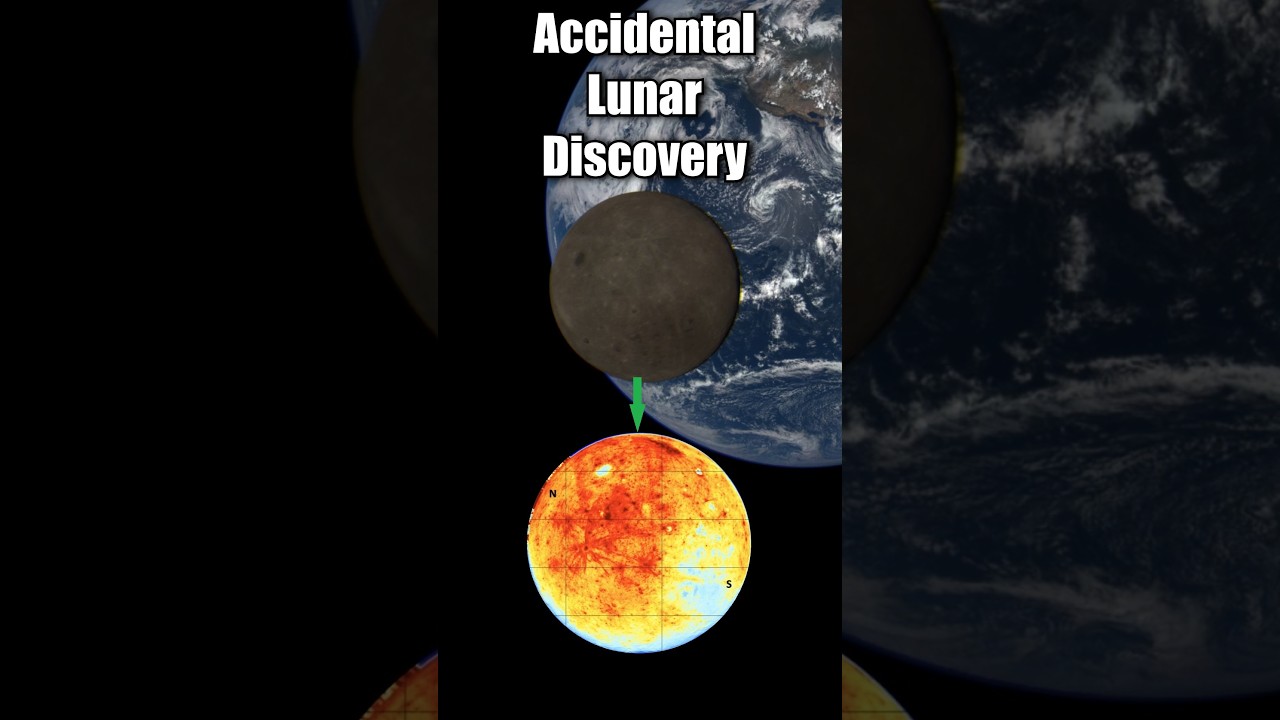
leptoni e neutrini: quest’interazione può esse fero e quest’interazione può esse piuma
Sempre abbastanza mindblowing (per me) vedere come cambia la percezione delle cose al cambiare la scala della visualizzazione
Si pensa ci sia anche una correlazione tra questo oscillamento e le estinzioni , causa un botto di radiazioni in più che investono il SS quando esce dal piano galattico
E cambiamenti importanti anche quando lo attraversa avevo letto (percentuali di impatti maggiori), ma le scale temporali e spaziali sono talmente grandi che si fa fatica a comprendere meccanismi correlati.